How to Use Drug Test Cups Effectively

Using drug test cups effectively involves following specific steps to ensure accurate and reliable results. Drug test cups are commonly used for workplace testing, probation monitoring, and in healthcare settings. Here’s a step-by-step guide on how to use them:

1. Gather Supplies:

Drug test cups

Specimen containers (if needed)

Gloves (to maintain hygiene)

Chain of custody forms (if required)

Timer or watch

A private and clean testing area

2. Prepare the Testing Area:

Ensure a clean and private area for the test to maintain the donor’s dignity and confidentiality.

Put on disposable gloves to avoid contamination.

3. Explain the Process:

Explain the testing process to the donor, including what to expect.

Emphasize the need for honesty and compliance with the procedure.

4. Collect the Specimen:

Ask the donor to provide a urine sample in the drug test cup. Most cups have a fill line, so ensure they fill it to the specified level.

If multiple samples are needed (e.g., for confirmation testing), divide the urine into separate containers.

5. Verify the Temperature:

Check the temperature of the specimen immediately after collection. The urine should be between 90-100°F (32-38°C), indicating it’s fresh and not diluted.

Many drug test cups come with built-in temperature strips for this purpose.

6. Seal the Cup:

Seal the drug test cup with the attached lid to prevent tampering.

Ensure that the lid is securely closed to avoid leakage.

7. Initiate the Test:

Start the timer according to the manufacturer’s instructions. Most tests require reading the results within a specified time frame, often 5-10 minutes.

8. Interpret the Results:

Read the test results within the specified time frame. Drug test cups usually have panels or indicators that change color to indicate the presence or absence of certain drugs.

Follow the instructions provided with the specific test cup for result interpretation.

If the result is negative, typically, lines will appear next to the drug panels.

If the result is positive or invalid, consider sending the sample to a laboratory for confirmation.

9. Document the Results:

Record the results on the appropriate paperwork or chain of custody forms if required.

Document the donor’s information, test date and time, and the person conducting the test.

10. Dispose of the Specimen:

Properly dispose of the used drug test cup and gloves according to local regulations.

11. Maintain Chain of Custody (if applicable):

In some legal or workplace settings, it’s crucial to maintain a chain of custody to ensure the integrity of the specimen. Follow the appropriate procedures for chain of custody documentation.

12. Handle Positive Results Carefully:

If the test results are positive, consider confirming them with a certified laboratory test before taking any further action. Positive results can have legal and employment consequences, so proceed cautiously.

Always follow the specific instructions provided by the manufacturer of the drug test cup, as the procedure may vary slightly depending on the brand and model. Additionally, ensure compliance with local laws and regulations governing drug testing procedures.

Best Drug Test Cups for Workplace Testing

Workplace drug testing is a crucial component of ensuring a safe and productive work environment. Drug test cups have gained popularity for their ease of use and reliability in detecting drug use among employees. In this article, we will explore the best drug test cups available in the market, providing you with the information you need to make an informed choice for your workplace.

Why Choose Drug Test Cups for Workplace Testing

Drug test cups are a preferred choice for workplace testing due to several reasons. They offer quick and accurate results, making the testing process efficient. Additionally, they are easy to use, reducing the need for specialized training. Moreover, these cups provide a hygienic way to collect and test urine samples, ensuring employee comfort and safety.

Key Features to Look for in Drug Test Cups

When choosing drug test cups for your workplace, consider key features such as the number of panels (substances tested), ease of result interpretation, and FDA approval. It’s essential to select cups that meet your specific testing requirements and comply with legal standards.

Top 5 Drug Test Cups for Workplace Testing

First Choice: iCup Drug Test Cup

The iCup Drug Test Cup is a top choice for workplace testing. With its comprehensive panel options and easy-to-read results, it offers accuracy and convenience. It can detect multiple drugs simultaneously, making it a versatile choice for employers.

Second Choice: Easy@Home Drug Test Cup

The Easy@Home Drug Test Cup is known for its user-friendly design and accuracy. It provides results within minutes, making it a valuable tool for on-the-spot testing. This cup is widely trusted for workplace drug testing.

Third Choice: Prime Screen Drug Test Cup

The Prime Screen Drug Test Cup stands out for its reliability and cost-effectiveness. It is available in various panel configurations, allowing employers to customize their testing requirements. The results are clear and easy to interpret.

Fourth Choice: DrugConfirm Drug Test Cup

The DrugConfirm Drug Test Cup is another reliable option for workplace testing. It offers accurate results and is suitable for both small and large organizations. The cup design ensures the integrity of the sample.

Fifth Choice: Rapid Detect Drug Test Cup

The Rapid Detect Drug Test Cup is known for its rapid results and ease of use. It is a popular choice for random drug testing in workplaces. This cup is designed to minimize the risk of tampering.

How to Use Drug Test Cups Effectively

Using drug test cups effectively involves following the manufacturer’s instructions carefully. Ensure that sample collection is done correctly and securely, and always maintain the confidentiality of the results. Employee cooperation and privacy are vital during the testing process.

Benefits of Using Drug Test Cups in the Workplace

  • Accuracy: Drug test cups provide highly accurate results, reducing the chances of false positives or negatives.

  • Efficiency: The testing process is quick and efficient, allowing for immediate action if necessary.

  • Cost-Effective: They are a cost-effective solution for workplace drug testing, saving both time and resources.

  • Deterrence: The presence of drug testing can act as a deterrent, discouraging drug use among employees.

Legal Considerations and Workplace Drug Testing

Employers must be aware of legal regulations regarding workplace drug testing. It’s crucial to follow local, state, and federal laws to protect both employees and the organization. Legal compliance ensures fairness and transparency in the testing process.

Challenges in Workplace Drug Testing

Workplace drug testing may face challenges such as employee resistance, privacy concerns, and the need for proper documentation. Employers must address these challenges to maintain a drug-free workplace effectively.

Tips for Maintaining a Drug-Free Workplace

  1. Educate Employees: Provide information on the company’s drug-free policy and the consequences of drug use.

  2. Regular Testing: Implement regular, random drug testing to deter drug use.

  3. Employee Assistance Programs: Offer support and resources for employees struggling with substance abuse.

  4. Supervision: Maintain a vigilant eye on workplace activities to detect potential issues.

  5. Review and Update Policies: Regularly review and update drug-free workplace policies to stay current with changing laws and regulations.

Creating and maintaining a drug-free workplace is vital for employee safety and productivity. Drug test cups offer a practical and reliable solution for workplace testing, ensuring that employees can work in a secure and drug-free environment.

FAQs

  1. Are drug test cups accurate?

    • Yes, drug test cups are known for their accuracy in detecting drug use.

  2. How often should workplace drug testing be conducted?

    • The frequency of drug testing varies by company policy but is often done randomly or after accidents.

  3. Can employees refuse to take a drug test?

    • Employees may refuse, but it can have consequences, such as termination, depending on company policy.

  4. What drugs do these cups test for?

    • The drugs tested can vary, but common panels include marijuana, cocaine, opioids, amphetamines, and more.

  5. Are drug test results confidential?

    • Yes, drug test results should be kept confidential and shared only with relevant personnel on a need-to-know basis.

What Are 4 Weeks Pregnant Symptoms?

What Are 4 Weeks Pregnant Symptoms?

If you’ve just missed your period, you’re probably suspecting right now that you’re pregnant. Are there any indications, possibly as early as 4 weeks pregnant symptoms, which you can watch out for? We’ll help you find out!

Believe it or not, some women experience early symptoms of pregnancy in the first few weeks of conception. However, most of these symptoms are similar to pre-menstrual signs. Because of this, a missed period is still the most concrete indication of pregnancy.

Here’s a fun fact for you – your date of pregnancy is based on the day of your last menstrual period. If you’ve already missed your period, then you might already be 1 month pregnant. What are some 4 weeks pregnant symptoms that you can check? 

Exhaustion

One of the first things that you’ll notice during early pregnancy is how you’re always tired and drowsy. It’s because of the sudden increase of progesterone in your body. Also, the abrupt changes happening in your body to accommodate its new guest will drain your energy. 

Spotting and cramping

Most women mistake these symptoms as light menstruation. However, this is actually part of the fertilization process called implantation bleeding. It usually occurs once the fertilized egg attaches to the lining of the uterus, causing mild vaginal spotting. 

If you’re suspecting that you’re pregnant, avoid using tampons to decrease the risk of infection. Keep in mind that you should seek professional help if the bleeding is foul-smelling or accompanied by fever. 

Swollen breasts

The hormonal changes that you’re currently undergoing during early pregnancy will make your breasts feel tender and sore. Your areola will also grow larger and become darker. We suggest you wear a comfy and underwire-free bra to minimize discomfort. 

Headaches and vomiting

Ah yes, the classic morning sickness. Despite its name, it can occur anytime and anywhere. You can blame your raging hormones and increasing blood circulation for it. Also, most pregnant women develop a heightened sense of smell which leads to sensitivity to different odors. 

If nausea causes you to vomit, make sure to stay hydrated by drinking plenty of water. Seek professional help if you’re vomiting excessively. 

Constipation and frequent urination

Your increasing progesterone causes the stomach to empty more slowly, leading to constipation. However, your kidney process more liquid because of your increasing blood circulation, so you’ll find yourself running to the bathroom more frequently. 

There are still a few more 4 weeks pregnant symptoms that you may experience such as food cravings and mood swings, but the only way to confirm if you’re pregnant is through pregnancy testing.

A quick and easy way to find out if you’re pregnant is by doing an hCG test. The hCG pregnancy strips detect the pregnancy hormone called human chorionic gonadotropin in your urine sample. This test is extremely sensitive and can be used as early as 14 days after conception.

If you’re suspecting that you’re pregnant, confirm it as early as possible with this fast and painless test. The hCG test is extremely helpful, especially for those who are actively trying to conceive because early detection is important in planning a healthy pregnancy. 

What Drugs Does a DOT Drug Screen Test For?

What Drugs Does a DOT Drug Screen Test For?

What Drugs Does a DOT Drug Screen Test For?

To reduce the number of accidents directly related to drug and alcohol use, the U.S. Department of Transportation (DOT) works hard in maintaining a drug and alcohol-free workplace. Part of this program is subjecting all safety-sensitive employees to the DOT drug screen test as part of their pre-employment screening

The Federal Motor Carrier Safety Administration (FMCSA), the sector of DOT that monitors commercial motor vehicle-related fatalities and injuries, implements a regulatory compliance and enforcement program to ensure the safety performance of all carriers.

Am I required to undergo the DOT drug screen test?

Positions that require the performance of safety-sensitive tasks such as truck drivers, aircraft maintenance, and train dispatchers are subject to the DOT drug screen test.

Managers and supervisors may also be required to take the test as part of their pre-employment screening because they may be asked to perform a safety-sensitive job in the event of an emergency.

What drugs does the DOT drug screen test for?

To determine substance abuse, the urine sample of the examinee will be tested for the following drugs and metabolites:

  • Marijuana metabolites/THC
  • Amphetamines
  • Phencyclidine
  • Cocaine metabolites
  • Opiates

If you’re taking medications and over-the-counter drugs, you will have to provide proof that the medicine is prescribed to you by a licensed physician.

Aside from pre-employment screening, can they test me for other reasons?

Yes. You may be required to submit to a DOT drug screen test due to reasonable suspicion. However, the suspicion must not be based on guess alone. There must be observations of your behavior and appearance that may be associated with substance abuse. 

If you’ve violated the policies concerning alcohol and drug use, you are also required to take a drug test before returning to duty. Follow-up tests are also mandatory. 

Under the DOT regulations, unannounced random drug testing must also be conducted to guarantee that the employees are following the regulations concerning drug abuse. 

How is the test administered?

The drug testing process will start with the collection of the examinee’s urine sample. The sample must be collected in a secure collection site to avoid tampering contamination.

After collection, the laboratory will conduct a specimen validity test to check if the sample was not adulterated or substituted. The drug screening test will follow. A urine sample that tested positive for substance abuse will be examined again using a different testing method. 

Can I refuse to be tested?

Based on the regulations implemented by the DOT, you are not allowed to refuse a test. Failure to appear for a test and not cooperating during any part of the testing process also indicates refusal on your part.

In the event where you don’t agree with the purpose of the test, we suggest you take the test anyway. You can dispute it with your employer after taking the test. The DOT agency drug and alcohol program office may also assist you.

What will happen if I tested positive?

Employers are required to immediately forbid you to perform safety-sensitive jobs. You may also lose your certification or license to perform your job. However, there are industry-specific policies that regulate these matters. 

The best you can do while moving forward is to seek help. There are a lot of resources available that will confidentially help you with your substance abuse problem.

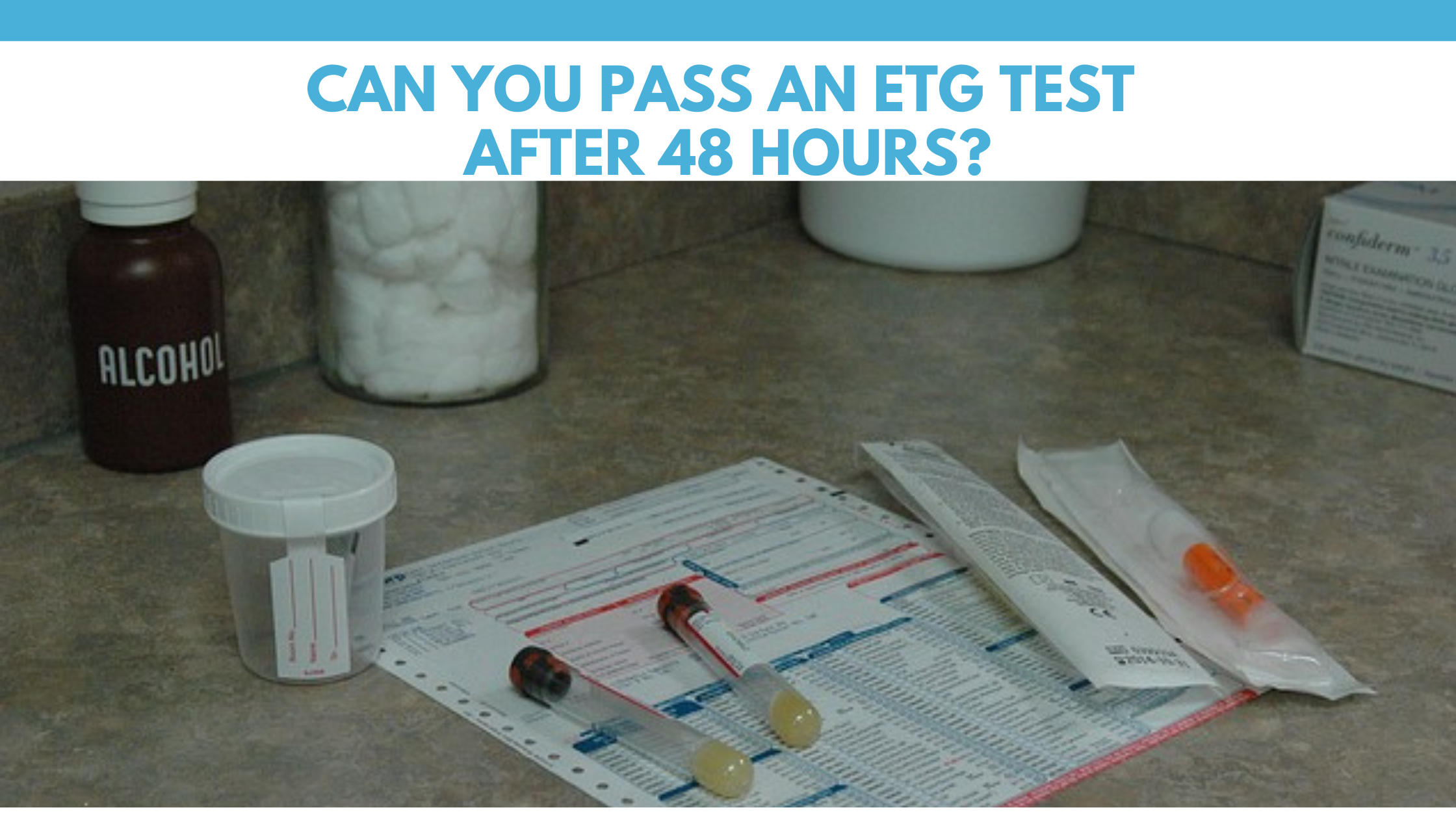
Can You Pass An EtG Test After 48 Hours?

Can You Pass An EtG Test After 48 Hours?

Most of us are familiar with the breath test and saliva test used to detect the presence of alcohol in a person’s blood. However, these tests are only valid for two to three hours after alcohol consumption. To monitor if a person hasn’t consumed alcohol for the past few days, opt for an EtG test. 

An ethyl glucuronide test, commonly known as the EtG test, is another type of procedure that detects alcohol in urine. How does it work? Can you pass an EtG test after 48 hours of alcohol consumption? Let’s find out.

How does it work?

After consuming alcohol, your body breaks it down into different metabolites. A direct metabolite of ethyl alcohol is ethyl glucuronide. This metabolite remains present in your body for two to five days, depending on how much alcohol you have drunk.

The EtG urine test detects the presence of the ethyl glucuronide on a person’s urine sample. Since this type of test can detect low levels of alcohol consumption, it is usually used to prove that the examinee is abstaining from alcohol.

An individual that has consumed alcohol and is taking an EtG test after 48 hours will likely receive a positive result. EtG tests can detect the metabolite for as long as 80 hours after alcohol consumption.

How is it done?

Once a urine sample is carefully collected from the examinee, remove the EtG alcohol test strip from its protective packaging. Make sure not to touch the strip membrane to avoid contamination.

Immerse the strip into the urine sample in a vertical position for ten to fifteen seconds. After pulling the strip out, wait for five minutes before reading the results. However, do not wait until ten minutes or the results will be considered invalid.

The EtG alcohol test strip is extremely sensitive. Make sure to properly store before using. Do not open the strip until you’re already performing the test to avoid contamination.

Interpreting the results

If the strip has one colored band in the Control Region and no colored band in the Test region, it is a positive result. A colored band in both the Control and Test Region indicates a negative result. However, if the Control Region has no colored band, the result is invalid.

The Substance Abuse and Mental Health Services Administration, commonly known as SAMHSA, advises that a positive result is not stand-alone evidence that an individual has consumed alcohol. Additional tests must be done to ensure the validity of the EtG test. However, a negative result is convincing proof that the examinee was not exposed to alcohol within the testing time frame.

How long can the EtG test detect alcohol in urine?

If you’re hoping to pass the EtG test after 48 hours of alcohol consumption, we have some bad news for you. The standard time frame for an EtG test to detect alcohol is 80 hours. However, it still depends on how much you drank and how fast your metabolism rate is.

However, we do not advise drinking large amounts of water before taking the test. Most laboratories can detect a diluted urine sample and may invalidate your results.